Initially starting this blog, it was supposed to be a lot more personal, as you can see by my first introductory blog.
I wanted to tell personal dating stories from the view of a queer person, but as my first blog developed, I found myself rather explaining things and adding my own personal anecdotes. For someone to understand my queer stories, they would first have to understand different queer terminology. From this I didn’t want to just explain my personal identities, but rather share as many identities as I could in a clear, entertaining and an easily understandable way.
Originally I did want the blogs to be didactic and even though the way I presented my content wasn’t the way I originally planned, I still believe that I achieved this.
Aesthetically, my blog could improve and I’ve learned that website design is definitely not my thing but I made the logo myself and the pink, yellow and blue flag is the pan sexual flag. I feel like I can get away with it being so busy though because queerness can be pretty loud, colourful and flamboyant.
Otherwise, I enjoyed and I’m happy with the overall experience and out come of my blog. I like the idea of it being around long after I forget about it as well, maybe it will help a confused little soul .
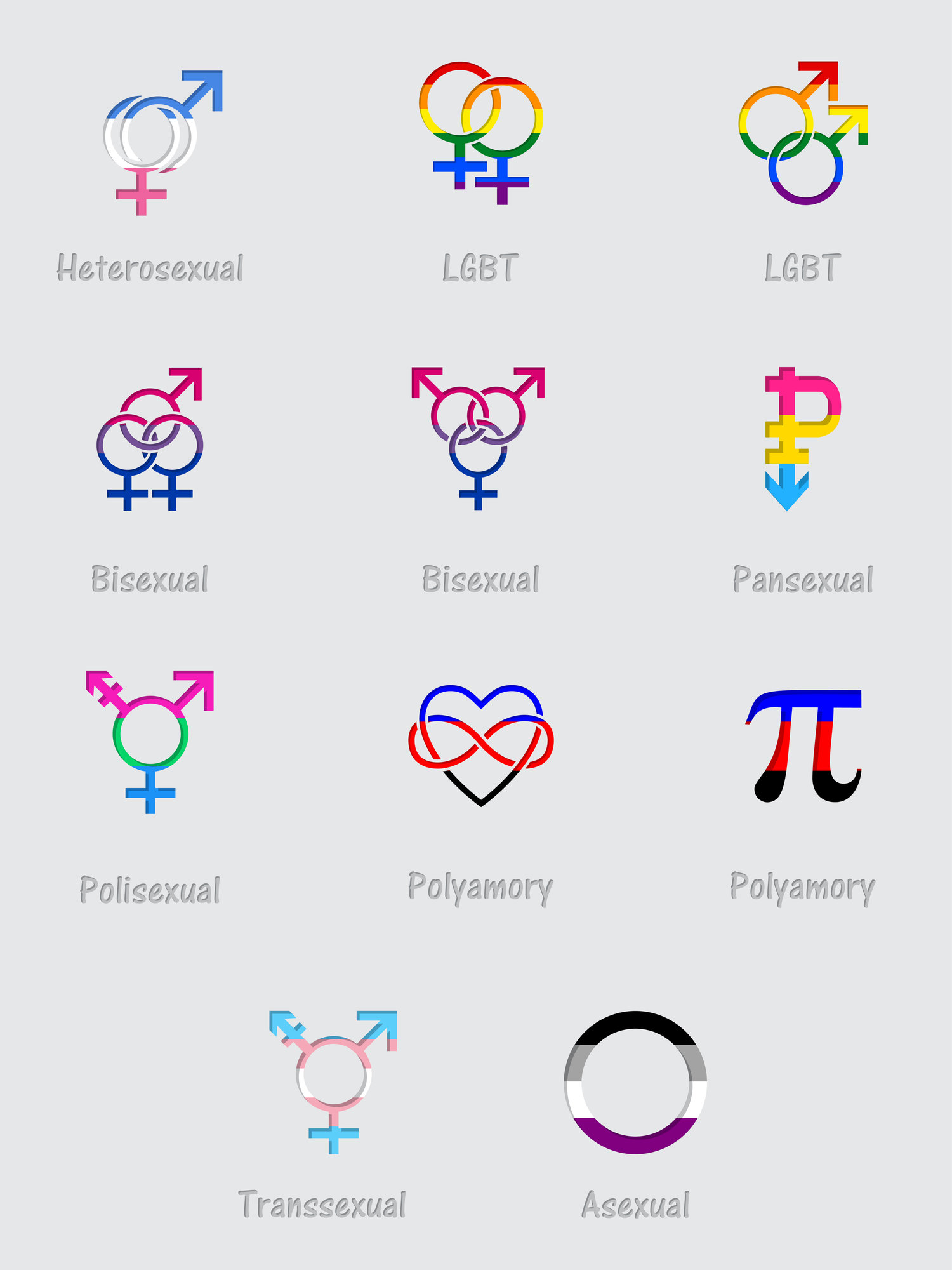
We’ve already covered asexuality and aromantic identities, which fall under the ‘sexual’ spectrum. The idea that some one can only exclusively like someone romantically or exclusively like someone sexually is a differentiation that isn’t common among most of the population, therefore when one says heterosexual, it is assumed that they are sexually and romantically attracted to that of the opposite sex. This is the case with most sexual orientation identities but one must remember that sexual attraction and romantic attraction are two separate spectrums. Some one can be heterosexual, that meaning they are only sexualy attracted to the person of the opposite gender, and no romantic feelings are felt.
I would like to note that polygamy is a religious practice of having multiple partners while polyamory has nothing to do with religion, but a person will still be interested in multiple partners.
As mentioned before, I am pansexual, this means that I am sexually attracted to all genders. Some people describe pansexuality as not seeing gender but that isn’t the case for me. I see gender and I’m typically more attracted to/have a preference for, males above any other gender, this doesn’t take away from the fact that I am pansexual as I’m still attracted to all genders. Gay and lesbian are common terms used for someone who likes the same gender, specifically male to male for gay and female to female for lesbian. Polysexual is a term that refers to someone liking more than 2 genders, but not all. So some one who is polysexual will be, for example, attracted to females, genderfluid people and pangender people.
Bisexuality is usually seen as someone being attracted to their own gender and that of the opposite gender, so a female will like females as well as males. In recent years the meaning of bisexuality has expanded to include some one liking there own gender and one other gender as well as someone just liking two specific genders. There is a term called bi-erasure that deals with the idea that bisexual people are ‘confused,’and ‘must pick a side.’ The idea furthers with gay people believing bi people are ‘too straight’to be gay and straight people would see bi people as ‘too gay.’ I noticed this being an issue on social media a couple of years ago but it has gotten a lot better in recent years. Bisexuals are queer and valid.
Having
come to an end and understanding all of the previous blogs, here comes the fun
part (in my opinion) – labelling!
Labelling
is naturally how you label yourself. There are people in the lgbt+ community
who dislike labels as they believe it is just people judging you, putting you
in a box, but I’ve always loved labels. As I’ve mentioned in previous blogs, I’ve
gone through some pretty confusing, questioning times and labels helped me. I
found my identity and didn’t feel so lost anymore, I felt understood.
So, what
am I? Well, I’m a cisgendered female who is pansexual (with a preference for
males) and panromantic (with no preference.) What about you? (:
I believe that the gender spectrum is the most important to understand because once you fully understand the gender spectrum, everything else becomes easier to understand. Gender is based on your masculine and feminine energy. Throughout history people have only focused on the masculine energy being linked to male and the feminine energy being linked to female, creating a binary world. As societies progress through feminism, dealing with racism, lgbt rights and so on, it leads to more people being vocal about gender as well. The fight for lgbt+ rights itself started with drag queens throwing bricks at the police.
In a binary
world, there are only male and female, so people who define themselves outside
of this are non-binary. Non-binary or genderqueer is the umbrella term used.
There are also a lot of different terms used and a lot of different forms that
come from mixing different terms. It is a bit complicated but once you know the
basics you can understand more complex terms. You’ll also see that many terms
are interchangeable or similar. I believe this is because this is a newer topic
in society but the concept of more than two genders has been around for ages,
so smaller groups created different terms and now it is all coming together in
the modern age of connectivity.
Transgender flag: Transgender is when you are born a certain sex but do not identify with that sex personally. Often this term is used for when someone transitions from male to female or vice versa, which it is but it isn’t only that. Transgender can refer to any gender identification that differs from the sex you were born. Transsexual is actually the correct term for when some one transitions from specifically male to female or vice versa, especially with medical intervention such as hormones and surgery. However, Transgender is just the term that is popularised.
Agender pride flag: This is when you define as genderless, or no gender. Neither female nor male. On a scale this would be neutral and another term for agender is gender neutral however this term is less used because of the idea of gender neutrality, which is the concept that no laws should discriminate against any gender.
Genderfluid
pride flag – Gender fluidity is when your gender changes, it is fluid. One day
you may wake up feeling more masculine, put on some colone and eyebrows, other
days you’ll feel more feminine and throw on some girly pants or put some blush
on. A great way to understand a genderqueer person is with bracelets. One
colour represents femininity and they wear it when they feel feminine, another
would be another colour to represent masculinity and another would represent
neutrality. Then you know what to refer to them as (he/she, him/her, them/they.)
At this point I wouldn’t be surprised if you were like “this is crap,” but so
many people are so vastly different, how can you not simply accept the way some
one chooses to express themselves? Especially if they find happiness in it. I’m
all for whatever makes you happy as long as you don’t harm another living
thing. These people are not here to hurt you, they just want to live their best
lives.
Genderqueer pride flag – As mentioned earlier, this is the umbrella term used for someone who is non-binary.
Non-binary pride flag – Umbrella term used for some one who is genderqueer.
I found a
“partial list” on this website http://keepmyncsafe.com/gender-spectrum/
and compiled it into a list. Some terms were not related to gender so I removed
them.
Agender Neither Neutrois
Neither male nor female. Defining with no gender.
Androgynous
Mixture of both male and female.
Bigender
Mixture of two gender identities (e.g feminine and androgynous or agender and masculine.)
Cis Cisgender
Cis and Cisgender is when your sex correlates with your birth sex and your gender correlates with your birth gender (in a binary world cisgender would only apply to a female identifying as feminine and a male identifying as masculine. It is important to remember that a cis person can still be a part of the lgbt+ community if they are gay etc.
Female to Male FTM Male to Female MTF
Transgender/transsexual terms.
Gender Fluid
Your gender changes.
Gender Nonconforming
Not matching typical gender norms.
Gender Questioning Gender Variant
Unsure of your gender.
Genderqueer Non-binary
Umbrella term
Pangender
Identify as a mixture of all genders.
Transfeminine Transmasculine
A person who was born a male but identify more with female expression but won’t call themselves a woman or a person born female but identify more with male expressions but won’t call themselves a man.
*Edit: Image I found and added after originally posting this blog.
With these
topics, there is always more to explain but this covers my blog on gender. The
final blog will expand further on sexuality, which will be easier to understand
now that gender has been covered.
In grade 11
I discovered the term ‘pansexuality’ but before I get into that, we need to
take a detour. At a point in high school I was in a relationship, and we had
started talking about our boundaries. Now, I had thought about sex and doing
sexual stuff but when it finally came down to it, it felt like a switch was
off. The relationship ended soon after for unrelated reasons but I was left
feeling confused about myself once again. I eventually figured out I was
probably asexual, or at least on the spectrum.
Asexuality
falls under the sexual spectrum (you know, homosexual, bisexual, heterosexual –
we’ll get into this) but in itself has it’s own spectrum or categories. I
believed I was asexual, which means I had no desire to have sex. The hook for
me was ‘some asexuals still enjoy masturbating.’ So I lived for a year not
really experiencing any sort of sexual attraction towards anyone, and then this
weird moment in matric happened of looking at my friend’s boobs the one day
(she was wearing a really pretty shirt) and suddenly adjusting to wanting to touch
boobs and much more.
I mention this story because it’s okay if you change. I’ve been a bit perverted for majority of my life and now I’m basically a perverted nympho but the year I was asexual is still a part of me and my story; it is valid. If you find yourself being bisexual and then after some time you realise you only like a certain gender and now you’re gay, that is okay. It should only matter to you and your partner(s).
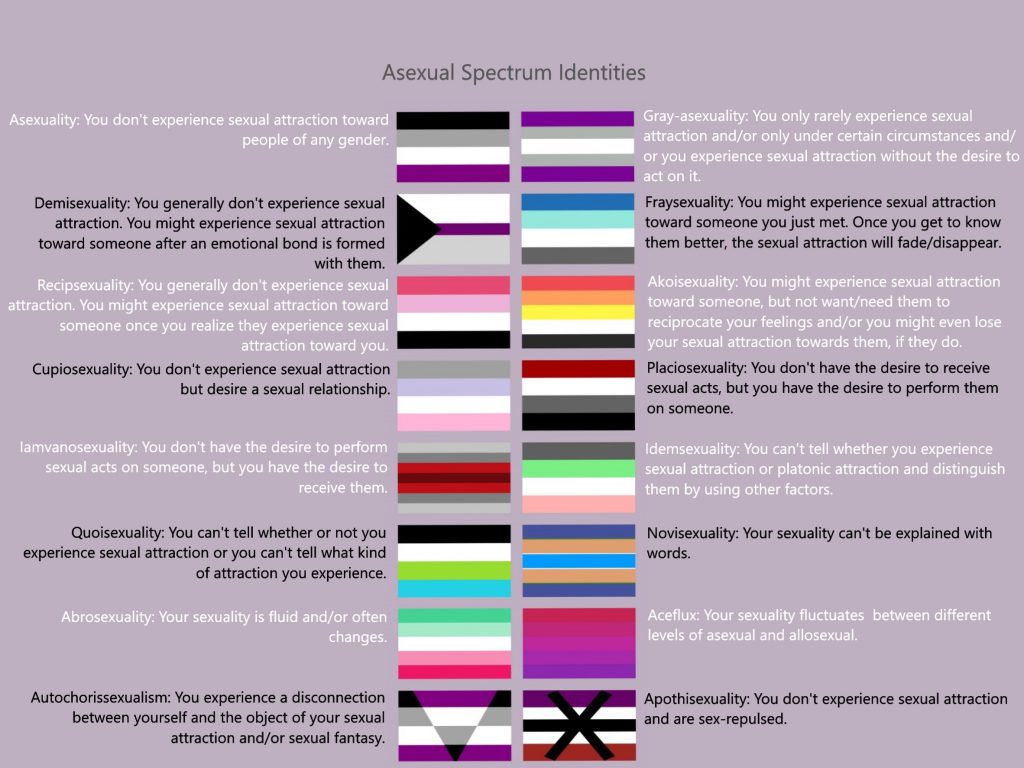
The Asexual Spectrum
Note that even if someone is asexual, they can still have romantic feelings or attraction to people. Researching this now, in retrospect when I believed I was asexual, I think was instead quoisexual because it was a confusing time for me. There are a lot of words and terms in the image above and you may think it is excessive but I believe they are important because they put into words the confusing feelings. Even if you don’t fully understand, it’s important to be accepting because at the end of the day, it is what makes that person happy and it has absolutely no effect on you. However, always remember that open and honest communication with a partner is important and this does affect them.
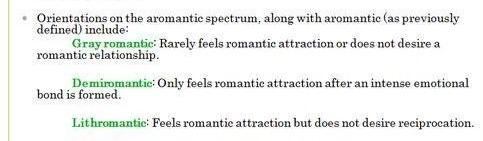
The Aromantic Spectrum
The same way we have an asexual spectrum, we also have an aromantic spectrum. Aromantic obviously meaning a lack of romantic attraction. A person who is aromantic can still have sexual feelings or attraction to people. The aromantic/romantic spectrum is also broad and you can replace the ‘sexual’ with ‘romantic’ for most terms in the image above and they relate to your romantic attractions or lack thereof. For example: Fraysexuality means you can have an initial sexual attraction to someone you’ve just met but it fades as you get to know the person better – in a romantic sense this would be having a strong initial romantic attraction to someone that fades as you get to know them.
I hope you look forward to next week as we further expand on the sexuality spectrum and speak about gender.
I started
questioning my sexuality around the age of 15. I don’t really remember what
started this chain reaction of exploring my sexuality but I remember that at
this time I started telling people I was bicurious. Bicurious means liking
someone of the opposite gender as well as questioning whether you like another gender
– for me, I started wondering if I liked girls. I went to google to find out
more and surprisingly, in retrospect, there was extremely limited knowledge. I
remember finding some information that was beyond just gay and lesbian on blogs
similar to this one but that was about it. I’m very happy now that throughout
the years countless of numbers of sources on gender and sexuality have been
uploaded to the internet. More people are focusing on educating and tolerance.
I continued
for the next two years to learn more about sexuality and gender and then in
grade 11, I had discovered the term pansexuality – my personal upgrade from bisexuality.
To understand pansexuality in its whole, we first need to understand the
spectrum of gender and sexuality. It’s finally time to get to the actual topic
of this blog.
I’ll be
explaining four things over the next 3 blogs: sex, sexuality, gender and romance.
Sex:
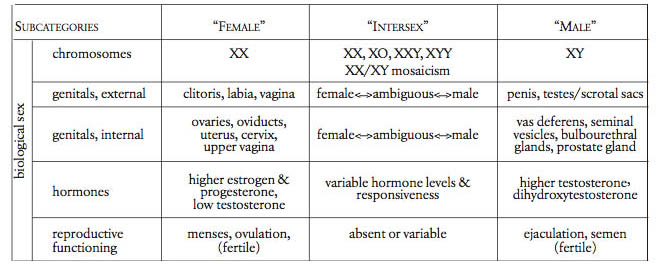
Why is there ‘sex’ and ‘sexuality?’ Well because sex is described as your physical or biological sex while sexuality is who you want to have sex with – and how much you want to have sex. Many people believe that sex is binary (of two, male and female) however, just like the 3 other topics, it is a spectrum. Male on one side, Intersex in the middle, and Female on the other side.
Intersex is defined as someone born with aspects of both male and female anatomy, chromosomes and/or hormones. An example of an intersex person is South Africa’s Caster Semenya because she has higher levels of testosterone. Semenya is on the scale of intersex however she leans far more towards female as higher levels of testosterone is her only intersex trait. Other Intersex people can have full blown genitalia that feature both male and female. Majority of the time when an intersex child is born, corrective surgery is done immediately and this can lead to complications later in life when puberty hits. Not only can this cause chemical and medical complications but can also lead to gender dysmorphia – the feeling that the body you’re in is not yours and that you should have the body of the opposite gender. Corrective surgery should not be done until after puberty, when the person either chooses or continues to live as intersex if that’s what they’re happy with.
Today’s Blog has come to an End:
Next week we will speak about gender, sexuality and romance spectrums, otherwise, I hope you enjoyed the introduction and understand biological sex better now.
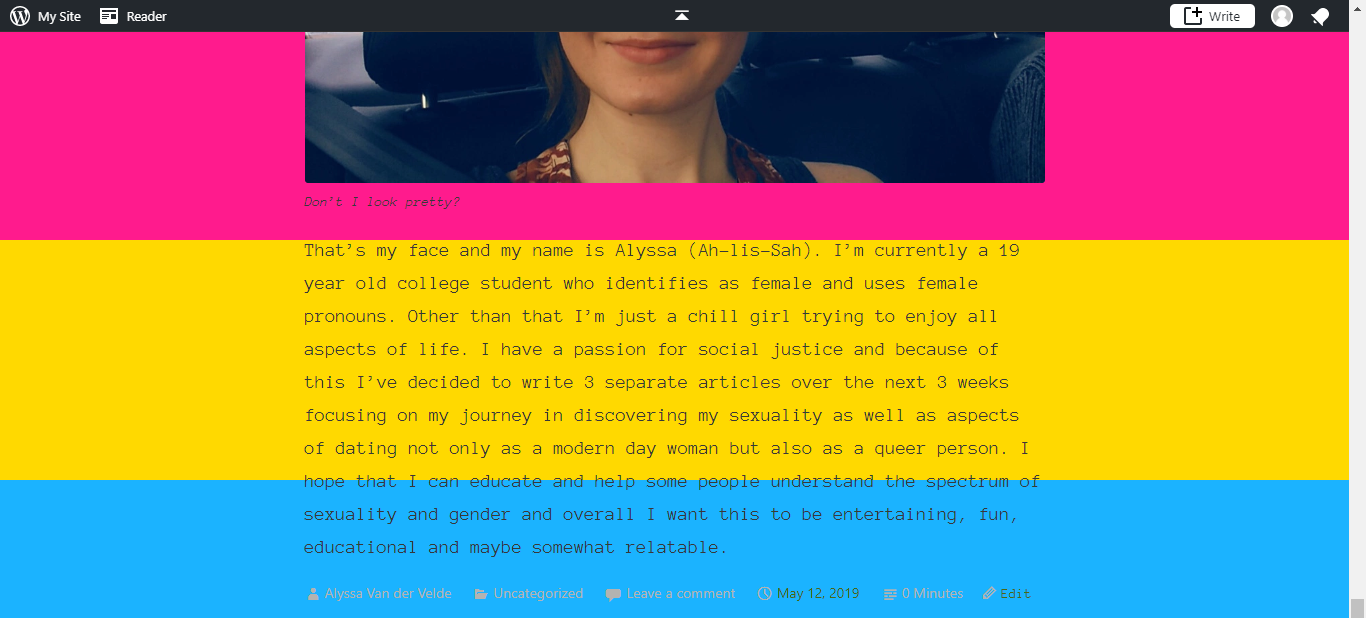
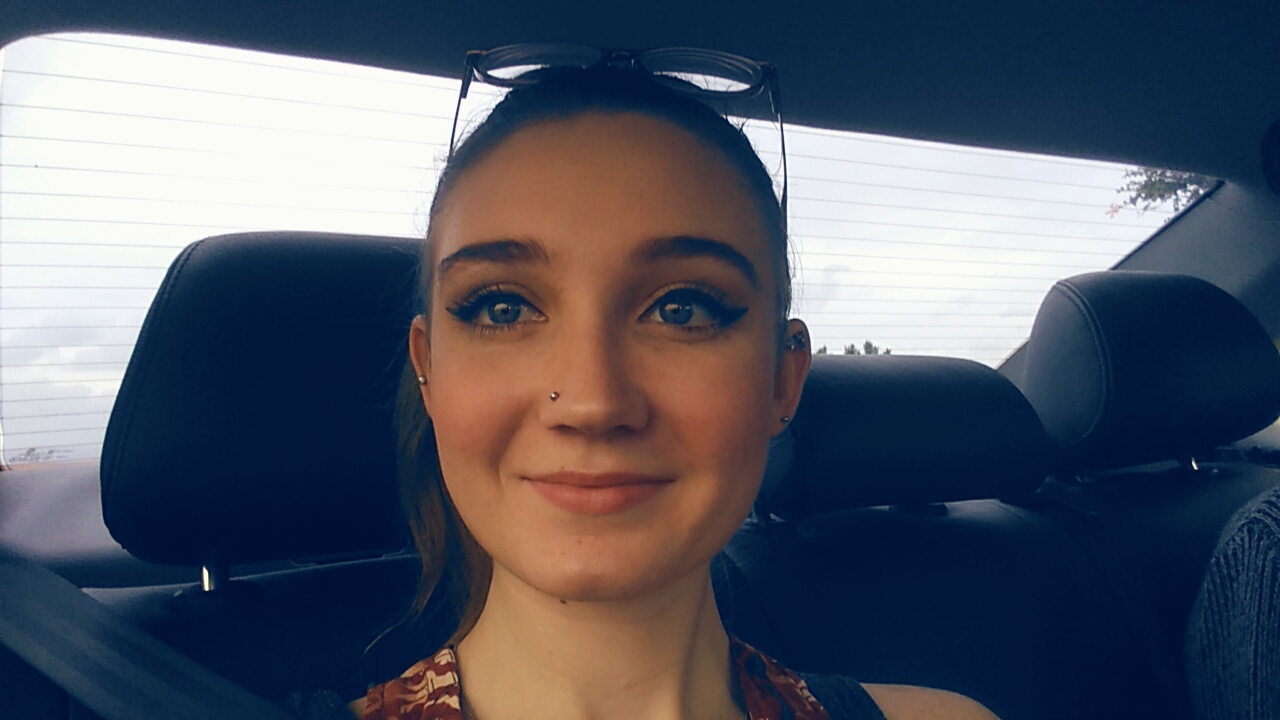
That’s my face and my name is Alyssa (Ah-lis-Sah). I’m currently a 19 year old college student who identifies as female and uses female pronouns. Other than that I’m just a chill girl trying to enjoy all aspects of life. I have a passion for social justice and because of this I’ve decided to write 3 separate articles over the next 3 weeks focusing on my journey in discovering my sexuality as well as aspects of dating not only as a modern day woman but also as a queer person. I hope that I can educate and help some people understand the spectrum of sexuality and gender and overall I want this to be entertaining, fun, educational and maybe somewhat relatable.




 A's Explanations


